Assassin's Creed: Why pop culture is hooked on pirates
July 8, 2026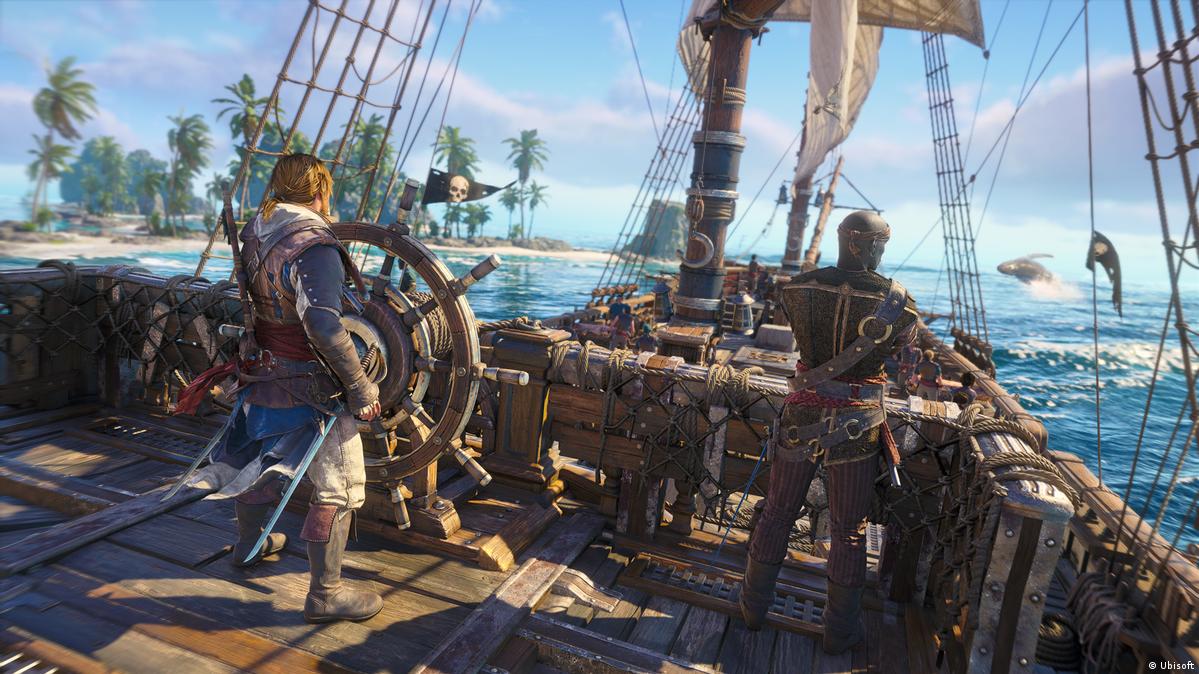
Piracy has a long and storied history, captivating audiences for centuries. The excitement of traversing the open sea, seeking treasure, and living on the edge feels timeless, and it's reflected in the gaming realm with titles like "Assassin's Creed Black Flag Resynced." Building on the framework laid by the original 2013 version, this game revitalizes the franchise with modern graphics and new missions that promise to engage a fresh audience.
The ongoing allure of pirates can be traced back to figures like Emilio Salgari and Rafael Sabatini, whose tales of high-seas adventures have inspired countless films and modern narratives, including classics such as "Captain Blood" (1935) and "The Black Swan" (1942). Robert Louis Stevenson's "Treasure Island" (1883) has led to various big-screen adaptations, and even Disneyland's "Pirates of the Caribbean" ride laid the groundwork for Ron Gilbert's "Monkey Island" games, which themselves shaped the franchise we know today.
This trend continues with several upcoming pirate-themed games on the roster for 2026, such as "Corsair Cove," "Windrose," and the aforementioned "Assassin's Creed Black Flag Resynced." This continual interest illustrates that piracy's appeal isn't waning; it's evolving, intertwining seamlessly with modern gaming culture.
The Myth of the Idealized Pirate
Contemporary views on piracy often romanticize the so-called Golden Age, a specific period in the 17th century characterized by the rise of piracy in response to European colonialism and mercantile expansion. During this time, pirates targeted merchant ships laden with goods from Europe and caused significant disruption. It's tempting to perceive them as daring adventurers, but the reality was often grimmer — most pirates led short, violent lives punctuated by lawlessness and retribution.
Historians like Jann M. Witt make a compelling argument that the popular romanticized image of pirates diverges significantly from reality. "The pirates people imagine today have nothing to do with reality. It's a romanticized image," Witt shared in an interview. Yet, there are some scholars who view pirates as egalitarian figures who challenged social norms of their time. However, Witt suggests that there is scant historical evidence to support these claims, often commenting that sources like Charles Johnson's work are more sensationalized than factual.
Sean Dagher, a musician who contributed to "Assassin's Creed Black Flag Resynced," sheds light on the role of sea shanties. Far from mere entertainment, these songs were essential for coordinating tasks among the crew. "Shanties are used to coordinate the work," he explained, emphasizing their practical application in maintaining a rhythm during grueling labor.
This blend of romanticism and reality makes the portrayal of piracy both captivating and misleading, ensuring that the allure persists across generations.
The Allure of Freedom and Adventure
There's an undeniable charm to the idea of piracy, rooted in themes of freedom and adventure. "The fascination with seafaring ties directly to the promise of escape," Dagher noted. This sense resonates strongly with players who engage in pirate lore, as many seek an adventure beyond the confines of their everyday existence. But let's be clear: the reality of life at sea was often harsh, with rigid hierarchies and limited means of survival.
Paul Fu, the game's creative director, acknowledges this disconnect. He mentioned that while pirate stories inspire fantasies of freedom, they often ignore the brutal reality of pirate life, a fact the game doesn't shy away from. Through the gameplay and storytelling, players experience the harsh realities of combat along with the thrill of adventure.
The Function of Pirate Narratives
Historically, pirate narratives have served not only as entertainment but also as cautionary tales embedded with social meaning, as noted by historian Eugen Pfister. "Pirates represented temporary reprieves from societal constraints," he explained. These tales frequently centered on characters who faced dire circumstances, only to return to societal norms. This reflects an era's societal values and mores.
A Shift in Pirate Representation
In recent years, this narrative has undergone a notable transformation. The portrayal of the “honorable” pirate has shifted to feature what Pfister refers to as the "liberal adventure capitalist." Characters like Jack Sparrow in "Pirates of the Caribbean" and Edward Kenway from the "Assassin's Creed" series epitomize this new archetype — self-serving adventurers, untethered by societal rules. Importantly, these stories continue a tradition of prioritizing the thrill of adventure over historical accuracy, crafting intricate, mythological worlds that resonate with contemporary audiences.
The enduring fascination with pirates is not merely about their actions on the high seas but also reflects greater cultural themes of rebellion, freedom, and the quest for identity. As this mythos evolves, it both captivates and challenges audiences to rethink the realities of piracy that often lurk beneath the romanticized surface.
This article was originally written in German.