France's far right set to improve ties with Germany
July 8, 2026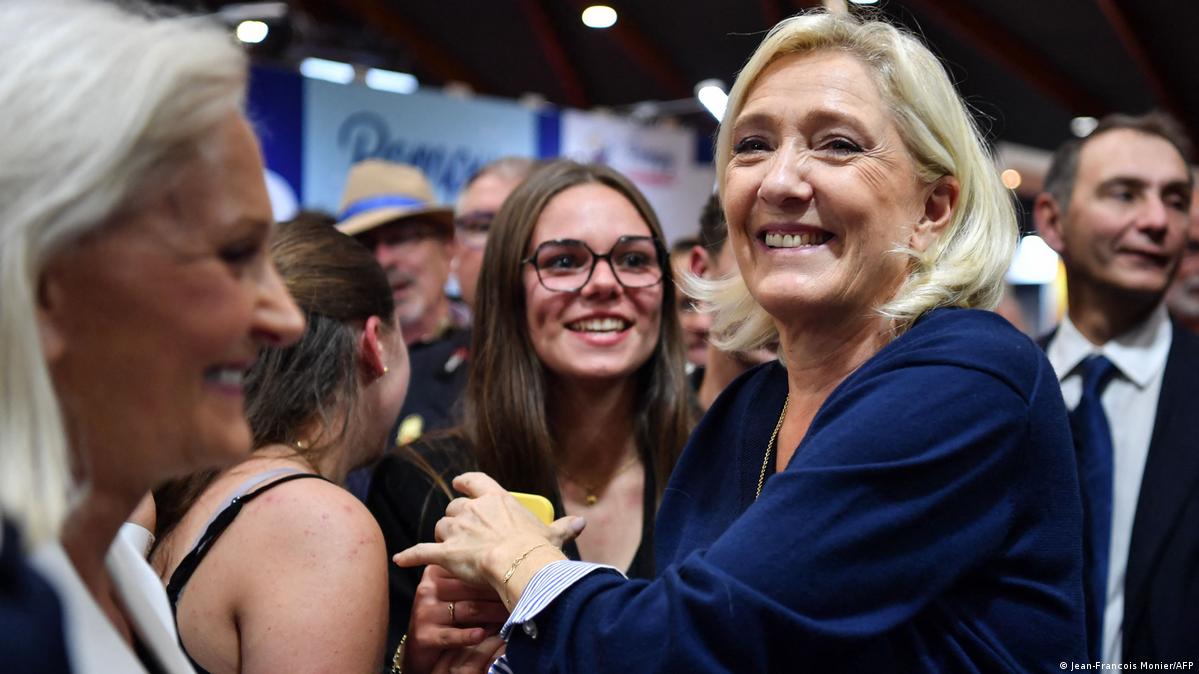
Marine Le Pen has officially declared her candidacy for the presidency on French television, a move that many find unexpected given her recent legal troubles. She now faces political and personal challenges, notably wearing an electronic ankle monitor due to a conviction related to the misuse of EU funds, a ruling that has been upheld by an appeals court in Paris.
Le Pen leads the Rassemblement National (RN), a party that has strategically shifted from its far-right roots to attract a broader voter base. This election marks her fourth attempt at the presidency, and her chances appear stronger than in previous years, especially with the unable-to-run Emmanuel Macron no longer in the picture.
The implications for the RN are far-reaching. Following Le Pen's announcement, party protégé Jordan Bardella has opted to bow out of the race for the 2027 election, consolidating support around Le Pen.
RN Leads in Polls
Current polling data shows the RN poised to excel in the upcoming election, potentially securing 32% to 38% of the vote in the first round. In contrast, former Prime Minister Edouard Philippe from the center-right Horizons party emerges as the RN's most formidable opponent, needing support from both center-right and left-wing voters to stand a chance in a runoff.
This mirrors dynamics seen in Germany, where alliances across the political spectrum are often formed to counter the rise of the Alternative for Germany (AfD), which is likewise polling strongly.
Jacob Ross, a France scholar at the German Council on Foreign Relations, observes that the inertia of creating coalitions to thwart the RN is dwindling. “The likelihood that the RN will also win the runoff is greater than ever before — that’s a certainty,” he states.
Shifting Stance on Alliances
The RN’s path to success has largely been built on a strategy called "de-demonization," where the party systematically rebranded to shake off the extreme views once associated with founder Jean-Marie Le Pen. As the possibility of winning the 2027 election solidifies, the RN has begun distancing itself from more extreme right-wing factions across Europe, particularly the AfD, focusing instead on potential partnerships with center-right parties.
Historically, both parties aligned on major issues like immigration and skepticism of the EU. Yet, in public statements, Le Pen and Bardella have cast the AfD as too extreme and have actively excluded them from collaborative efforts in the European Parliament, signaling a tactical shift.
This move is critical, as stronger ties with German conservatives signify a broader strategy to legitimize their party among center-right voters. Discussions with the German ambassador earlier this year and praises for Chancellor Friedrich Merz highlight a growing goodwill between the two parties, particularly in critiquing the EU on migration and environmental policies.
Potential Challenges Ahead
While Bardella’s compliments towards the German government have been welcomed, the Chancellor's office has been reticent in its response. Merz remains committed to European unity and is cautious in embracing overtures from France’s far-right. The prospect of an RN presidency could strain Franco-German relations, especially concerning energy and EU funding debates.
Ross speculates that a Le Pen victory could lead to significant tension within the EU framework, especially if France were to pull back from commitments like EU energy markets or drastically cut its contributions.
Learning from Others
Despite concerns, experts like Ross argue that Franco-German collaboration isn't doomed. The experience with Italy's right-wing Prime Minister Giorgia Meloni suggests that initial skepticism can give way to pragmatic alliances once in power. “While there may be friction and a loss of trust, it won’t completely derail cooperation,” he concludes.
This article was translated from German.