In Cameroon, many young people are turning their online presence into a valuable source of income.
Originally published on Global Voices

A content creator making a video. Image from CanvaPro.
By Julienne Honba
Content Creation as a Mainstay
For many young people in Cameroon, establishing an online presence has evolved into a significant economic opportunity. These individuals manage to balance university coursework and part-time employment with content creation, which increasingly serves as an additional revenue stream.
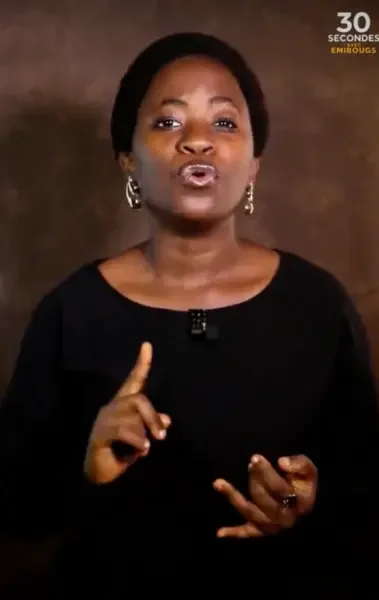
A screenshot of one of Emily Bougem’s videos.
Take 25-year-old Emily Bougem as an example. Each morning begins at 3:30 a.m. for her, where she engages in content creation before her university classes. This has been her routine for four years, during which she has built a brand, EmiBougs services, focused on tutorials and tips related to Microsoft Office and digital logistics.
For Bougem, the online space isn't just a hobby; it's a necessity. She articulates the reality many face, stating:
The job market is saturated. If I ever want a chance at securing a stable job, I have to make myself known. I need connections. But more importantly, I need money. What other option do I have besides making use of platforms like LinkedIn, Facebook and Instagram? All it takes is data and a little courage.
The Economics of Visibility
The narrative Bougem presents resonates with a growing number of young Cameroonians. In a job market characterized by limited formal employment options, social media is increasingly perceived as a place to cultivate economic viability rather than just a pastime. With over 12 million internet users and almost 6 million social media users in the country, digital platforms are now integral to daily existence.
Among those making strides in this arena is 28-year-old Florent Marius Ngah, known to his followers as “Dylan Comedy.” Initially entering the digital space for entertainment, his viewpoint shifted significantly when he began earning money from his content in 2022. He shared:
At first, it was not professional at all. I was just creating content for fun. Things changed around 2022 when I started earning money from it. That is when I began to take it seriously.
Ngah emphasizes that while content creation can be precarious, visibility has proven beneficial in unlocking opportunities that would otherwise be inaccessible. He succinctly explains:
What brings income are partnerships, advertising and collaborations. If you are not visible, your content cannot reach people and those opportunities do not come.
His experiences highlight a key distinction: visibility is more valuable than mere popularity. It has facilitated introductions to influential figures and fostered relationships that have enriched both his personal and professional life.
I have met people I never thought I would sit with. Some of them have become very close friends.
Shifting Employment Paradigms
The trend toward digital entrepreneurship and content creation signifies a transformative shift in how young people in Cameroon view employment. Increased digital connectivity has altered traditional job searches, incorporating elements of personal branding, networking, and content monetization.
Facebook currently leads as the primary platform for social media engagement in Cameroon, accounting for roughly 86% of social media traffic. However, user engagement does not always translate to professional opportunities. Platforms like LinkedIn are becoming increasingly favored by young professionals seeking internships and job prospects.
An informal WhatsApp survey conducted in May 2026 among University of Yaounde I students underscored this trend. Of 30 respondents, 27 favored LinkedIn for professional opportunities, while just three selected WhatsApp. Not one mentioned Facebook or other mainstream social networks as their go-to for career-related interactions, highlighting a potential shift in how digital platforms are leveraged for professional growth.
Potential Risks of Digital Engagement
However, the same platforms that foster economic opportunities can also expose individuals to risks. Dylan Comedy acknowledges these threats with a pragmatic perspective:
Nothing in life comes easy. If I want something, I have to take risks.
The realities of online presence include dangers such as identity theft, cyberbullying, and scams. Victims like Ndjakomo recount distressing experiences when their accounts were compromised:
The person who hacked my account used my identity to ask my followers for financial assistance. I was too young to know how to handle the situation.
These incidents are not isolated cases. Growing concerns around cyberbullying and fraud are echoed in a recent UNICEF survey, indicating that one in three young people across 30 countries have faced online bullying.
In response, the Cameroonian government is taking steps to enhance cybersecurity and digital literacy through various initiatives aimed at promoting safer online practices. There's also new legislation on personal data protection that seeks to provide greater security for citizens in the digital landscape.
Balancing Visibility and Competence
Yet, experts caution against equating visibility with employability. Michel Boris Affah Ebengue, a founder of Futura Tutoring and an industrial engineer, believes that social media can open doors but that solid skills and qualifications are vital for success:
Social media can open doors, but it is skills, qualifications, and the ability to create value that allow people to walk through them.
For Ebengue, online platforms are indispensable tools in today’s professional environment, but they should complement ongoing education and skill development.
Online platforms are an excellent tool, but they can never replace training and the continuous development of skills.
The ongoing evolution of digital platforms is reshaping how young people in Cameroon forge connections, pursue careers, and establish professional identities. While visibility can yield access to unparalleled opportunities, it also invites challenges that necessitate a wise and measured approach. The pursuit of digital opportunity for young Cameroonians now requires a balancing act—navigating the landscape where every engagement can either lead to opportunity or risk.