A landslide built on a promise to include the whole province
Lorne Doerkson’s win is striking for two reasons: the scale of the Conservative victory, and the speed of the party’s recovery. Early Sunday, B.C. Conservatives led in 64 ridings, while David Eby’s NDP was down to 27 seats and several cabinet ministers had lost. Just five weeks earlier, the Conservatives were in disarray. At his victory speech Saturday night, Doerkson cast the result as a rebuke to a provincial government that had left parts of B.C. feeling overlooked. More than 1,000 supporters gathered at Vancouver’s Rocky Mountaineer Station as he argued that the province’s political map should extend beyond the Lower Mainland. “For a very long time, a lot of British Columbians have felt like Victoria forgot about them, like the map maybe stopped at Hope,” he said. “But tonight the whole map counts.” That message will matter as much as the seat count. Doerkson is the first premier from B.C.’s Interior since Bill Bennett left office in 1986. If you’re trying to understand his appeal, his background helps explain why he put smaller communities at the centre of his speech.From community newspapers to the premier’s office
Born in New Westminster and raised in Surrey and the Interior, Doerkson eventually settled in Williams Lake and raised a family there. Before entering politics, he spent 20 years publishing community newspapers and volunteering with local business and service groups. He told supporters that work taught him to see how a town was doing by learning “who’s hiring, who’s closing, who’s hoping.” He was elected in Cariboo-Chilcotin as a B.C. Liberal in 2020, then [joined John Rustad’s fledgling Conservative caucus](https://www.cbc.ca/news/canada/british-columbia/doerkson-b-c-conservatives-united-politics-1.7221392). The leadership came suddenly. Doerkson was returning from South Africa last month when colleagues asked him to take over as interim leader. Kerry-Lynne Findlay [had resigned after months of scandals](https://www.cbc.ca/news/canada/british-columbia/kerry-lynne-findlay-resigns-as-leader-of-the-b-c-conservative-party-9.7351532), which had prompted more than a dozen MLAs to leave or be expelled. Doerkson said he needed persuading, describing the appointment as “a little bit of a short notice” in a [pre-election interview with CBC News](https://www.cbc.ca/news/canada/british-columbia/unexpected-leader-lorne-doerkson-pitches-himself-to-british-columbians-9.7379662).Growth promises, with a price tag still in question
In his speech, Doerkson reached for the province’s gold-rush history, praising the “trailblazers” who came looking for gold and a better life. He said that appetite to build still runs from resource towns to major urban centres, and argued that government should support it. The rhetoric points toward his central economic pitch: fewer rules, faster permits and more resource production. He promised to cut red tape “like it’s never been cut before,” speed forestry and mining approvals, and triple natural gas production by 2035. He also pledged no new taxes and health care that is “fully and publicly funded.” The connection between a mill in Quesnel, a trucker in Surrey, a northern mine and the port in Delta is a clear way to frame the province as one economy. The harder question is whether the promises can be funded. Doerkson has pledged to cut income taxes by $1,000 a year, but [questions remain about the platform’s costs](https://www.cbc.ca/news/canada/british-columbia/bc-conservative-platform-costing-9.7386949). B.C. is already projected to run a $13.8-billion deficit in 2026-27, and the NDP warned during the campaign that Conservative plans could mean cuts to health care and education.Images and video
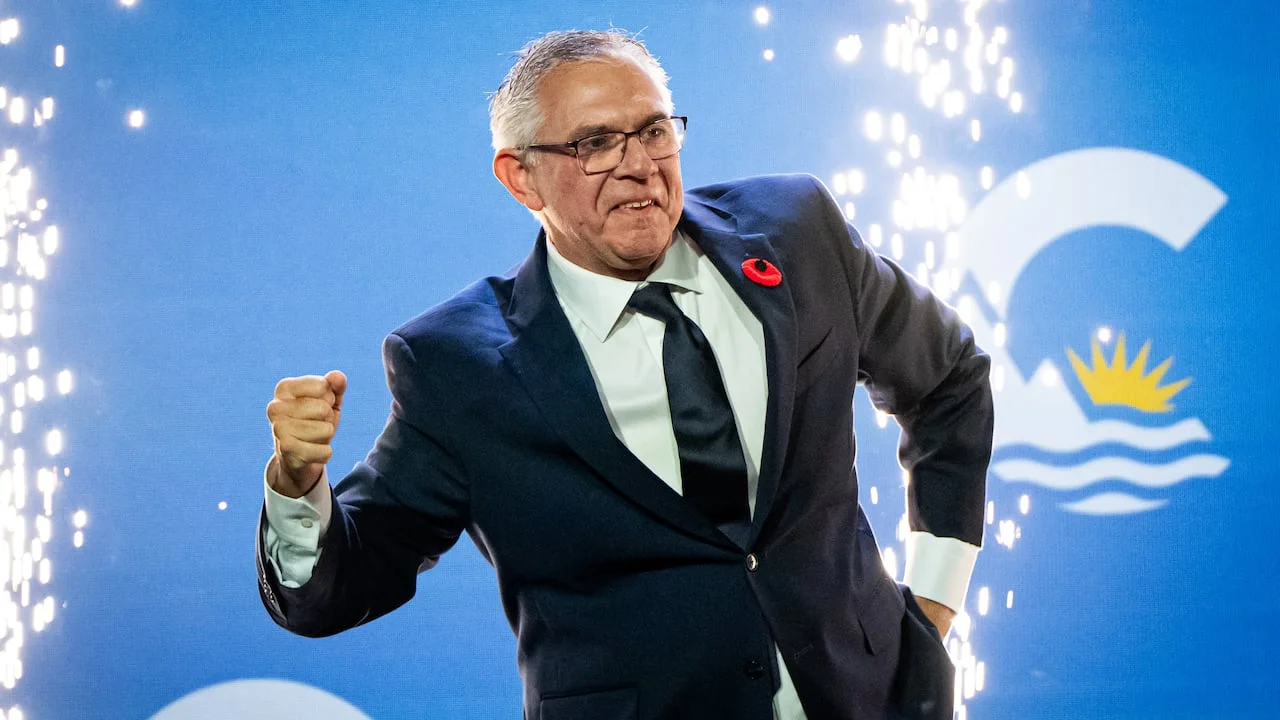
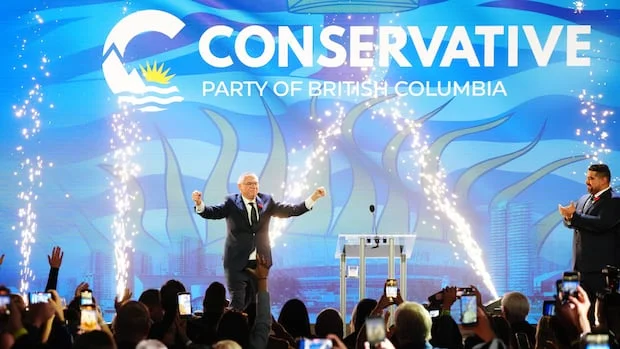
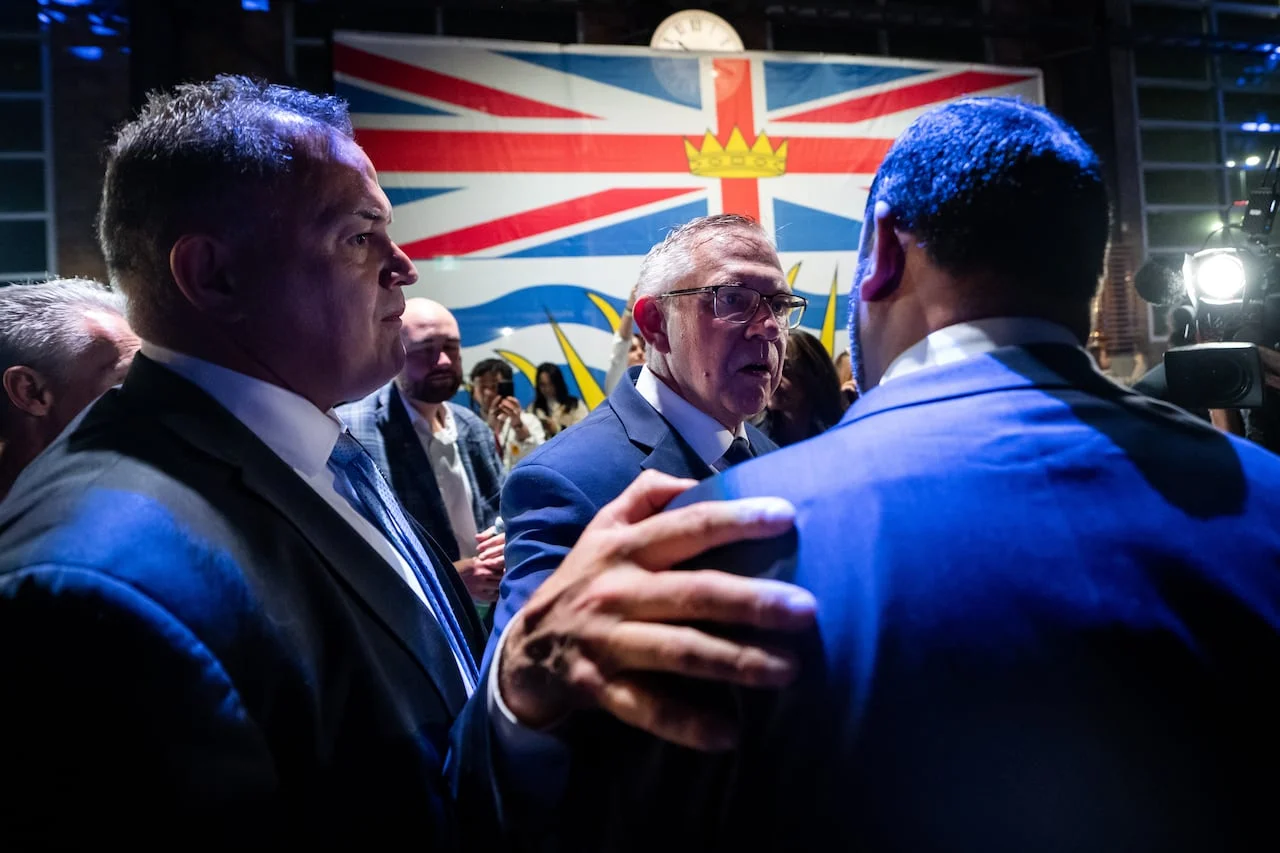
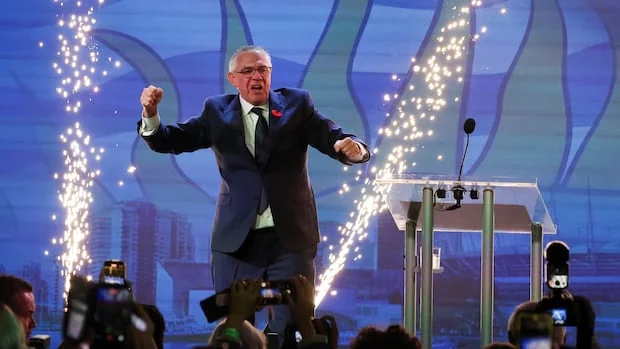

At a Vancouver speech on Saturday, Lorne Doerkson repeated his promise to cut red tape “like it’s never been cut before.” (Ethan Cairns/The Canadian Press)
Holding the coalition together
Winning office is only the first test for premier-designate Lorne Doerkson. His Conservative coalition spans social conservatives and more centrist, fiscally conservative voters; governing means keeping those groups aligned when their priorities may diverge.
That balancing act is already visible in his message to First Nations. Doerkson has pledged to repeal B.C.’s Declaration on the Rights of Indigenous People’s Act, yet he also described Indigenous communities as partners in the province’s development. “This future is one we build together as partners with the certainty that all of us need,” he said. The promise of partnership sits uneasily beside the repeal pledge, and the fragment offers no detail on how he intends to reconcile them.
The New Democrats are unlikely to be Doerkson’s immediate political headache. Preliminary results put the party below 30 seats, leaving it to choose a successor to David Eby, who announced Saturday that he will step down. For now, the larger question is whether Doerkson can hold his own coalition together while turning campaign promises into a governing agenda.
With files from Matt Preprost, Simon Little and Katie DeRosa