A funeral shaped by two traditions
The service for Sgt. Morgan Wong, held Sunday in central Edmonton, brought military ritual together with Buddhist funeral customs. Wong was 26, one of four service members killed in a fire at Canadian Forces Base Wainwright the previous weekend. The ceremony held space for both his life in uniform and the traditions his family chose to honour him.
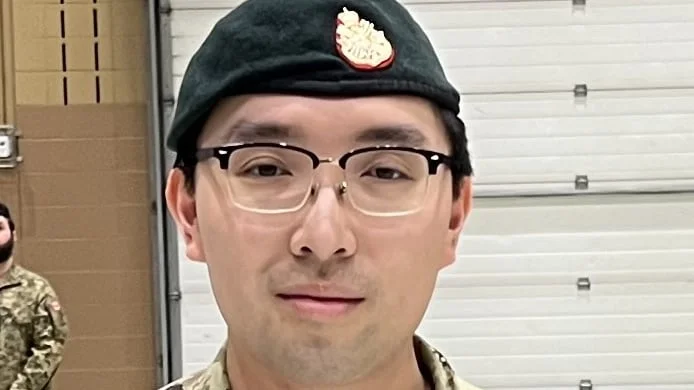
Eight service members carried Wong’s Maple Leaf-draped casket as bagpipes played, a public expression of military loss and comradeship. Later, the flag gave way to a yellow descendants’ blanket, a traditional Chinese textile used at funerals. That change in the ceremony connected the regiment’s formal tribute with the family’s cultural observances.
A shrine holding Wong’s photograph, fruit, rice and flowers stood before the casket while mourners observed Buddhist customs. Many people at the packed funeral home wore poppies, adding another familiar sign of remembrance to a service shaped by several traditions. The details mattered: they showed how a funeral can reflect a person’s service and family history at the same time.
His sister, Megan, spoke about the memories that friends and family shared with Wong and the example she hopes they’ll take from his life. “Each one of us has our own special memories of Morgan, and I hope holding onto those memories will remind us to live our lives with courage and integrity, like he did,” she said.
“He was too young when he left us,” Megan added. She urged those gathered to use their time to build lives they could be proud of. She described her brother as brave, warm and hilarious, a loyal friend and dedicated soldier, and said he’d been close to their mother. “Now they’re together again,” she said.
That tribute framed Wong through the relationships and qualities his family remembered, rather than through the circumstances of his death alone. A soldier, a brother, a friend. The words also carried a message to the people in the room: the way they live can keep something of his example present.
The fire behind the loss
Wong served with the Loyal Edmonton Regiment and the 3rd Battalion, Princess Patricia’s Canadian Light Infantry. His family said he joined the military in 2017 and was at Wainwright preparing for a second deployment to Europe. The loss therefore reached across more than one unit, affecting colleagues who served with him and people who knew him outside military life.
The fire began on Oct. 17 during a training exercise in the base’s grenade launcher range, described as a “permanent danger area” that base firefighters couldn’t enter. Strong winds drove the flames rapidly across the region, overwhelming service members and carrying the fire beyond the base. Dozens were killed or injured; four service members died.
The description of the range and the speed of the fire point to the difficult conditions facing those caught in the incident. A designated danger area limits where firefighters can go, while rapidly changing conditions can leave little time to respond. The reported facts establish the scale and spread of the emergency, though they don’t, by themselves, settle every question about how it unfolded.
Wong’s family offered condolences to the other soldiers affected. Friends and people who volunteered with him have remembered him as a committed volunteer and mentor, extending the sense of loss beyond the military. Those accounts suggest a life that included service to others in more than one setting.
Lt.-Col. Bryn Wright, commanding officer of the Loyal Edmonton Regiment, said in a statement that Canadians’ support meant more to the regiment than it could express, and that Wong’s family would always be part of its family. The comment places the family within the community that shared Wong’s service and is now mourning him.
What the ceremony leaves behind
This is more significant than it looks: the service made room for different forms of remembrance without asking one to stand in for the others. Military honours recognized Wong’s role as a soldier; Buddhist customs and the family’s chosen textile reflected traditions rooted in family and culture. That combination gave mourners several ways to understand the person they’d come to honour.
If you’re working in a military community, the ceremony also points to the personal ties that formal language can’t fully capture. A unit can speak of a fallen member as part of its family, while relatives remember a brother, son and friend. Both accounts matter, and the funeral gave them a place together.
Here’s the thing: public attention often narrows after a tragedy to the event itself. Wong’s funeral brought attention back to the person behind the loss, while the circumstances at Wainwright remain part of the wider story. And yet, the tributes from his family, regiment, friends and fellow volunteers can’t answer questions about the fire. They do show why its effects reach well beyond the base.
Edmonton sergeant killed in CFB Wainwright fire remembered as volunteer leader, mentor
Rapid spread of fire was main factor in CFB Wainwright deaths, injuries: top military commander