Ontario’s online betting boom carries a growing public health cost
The sharp rise in gambling harm is the story here. Nearly 130,000 Ontarians now show signs of problem gambling, up from about 43,000 in 2018. Gambling related suicides have also tripled since Ontario expanded private online casinos and sports betting in 2022, CBC News reports. For Anna, a 51 year old single mother of two teenagers, online slot games nearly cost her everything. Even after losing enormous sums, she found it hard to stop. At a Gamblers Anonymous meeting in Toronto, she described betting apps sending her thousands of dollars in “free money” offers when she went a while without gambling. The support group helped her quit and escape the apps’ inducements and marketing. That personal account points to a wider question: what happens when gambling is always within reach, and its promotion follows players onto their phones? New research from the Alberta Gambling Research Institute (AGRI), using Statistics Canada’s 2025 Canadian Community Health Survey and the Problem Gambling Severity Index, puts Ontario’s problem gambling rate 0.5 percentage points above its 2018 level. Researcher Carrie Shaw says the increase appeared six months after private online casinos opened in 2022, even as rates fell elsewhere in Canada. “Gambling is very much normalized through access and advertisements,” Shaw said. Ontario’s exposure is greater than elsewhere in the country, she added. Alberta joined Ontario in allowing private companies to run online gambling in July; it remains illegal elsewhere in Canada. Online betting removes practical barriers, Shaw said: people can gamble on a computer or phone at any hour, including while at work. The suicide figures sharpen the concern. Ontario’s Office of the Chief Coroner recorded an average of five gambling related suicides a year from 2016 through 2021. The annual number tripled after 2022. Matthew Young, chief research officer at non profit research network Greo Evidence Insights, says he urged governments two years ago to track online gambling more effectively, citing risks that included addiction, bankruptcy and suicide. “We warned that we might be seeing the harms that we're now seeing in the data,” he said. He says those warnings were ignored. Ontario says it has spent $421 million on responsible gambling education, research and addiction treatment since 2018, including nearly $70 million last year. The Ontario Lottery and Gaming Corporation says it spent almost $159 million on its PlaySmart program, which offers education, player protection tools and referrals to support services. iGaming Ontario has also launched [BetGuard](https://www.betguard.ca/gp/en/), a single registration system that lets players exclude themselves from all regulated online gambling sites. Those measures sit alongside other signs of rising demand for help. A September 2026 study in the [American Journal of Preventive Medicine](https://www.ajpmonline.org/article/S0749-3797%2826%2900294-1/fulltext) found a sharp increase in Ontario emergency department visits by people with gambling disorders. A March 2026 study in the [Canadian Medical Association Journal](https://www.cmaj.ca/content/198/8/E281) reported a 95.5 per cent rise over the past decade in gambling related calls from men and boys to ConnexOntario, the province’s 24 hour mental health and addiction helpline. Young calls it “unfathomable” that Canada changed its Criminal Code to permit online gambling while provinces opened markets without properly studying the public health effects. The data now gives that criticism weight, though it doesn’t by itself establish that online expansion caused every increase. [Lead image: A black jack game on a mobile phone. CBC says problem gambling and gambling related suicides have risen since Ontario’s 2022 expansion. (Evan Mitsui/CBC)] [Watch: “Anna” says Gamblers Anonymous helped her find connection and recover from addiction.] [Image: Carrie Shaw of the Alberta Gambling Research Institute. (CBC)] [Watch: *The Gamblification of Canada*. The Fifth Estate examines the rapid growth of sports betting options.] [Related: More people are seeking emergency care for gambling, a new study says — and it’s mostly men and boys.] [Related: Sharp rise in young men contacting Ontario gambling helpline, researchers find.]Research and support must keep pace with expansion
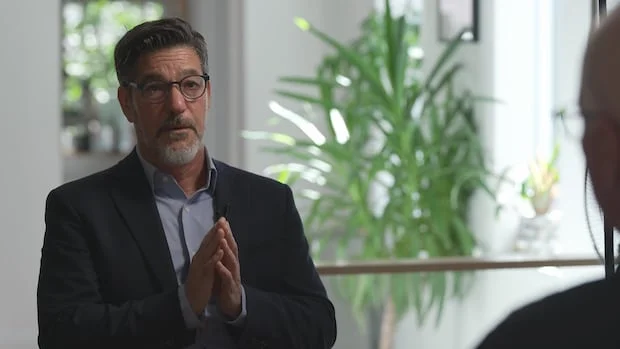
Canada expanded online gambling without first analyzing the potential harms, says addictions researcher Matthew Young. As other provinces consider legalization, he wants stronger monitoring and a portion of the industry’s billions in revenue directed to independent research on addiction and gambling-related harm. That’s a pointed gap: policy makers are weighing expansion while the evidence needed to track its effects remains limited.
The research infrastructure has also weakened. Greo Evidence Insights, previously the Ontario Problem Gambling Research Centre, lost its provincial funding in 2019.
If gambling is affecting you or someone you know, support is available:
- ConnexOntario: 1-866-531-2600 or text CONNEX to 247247
- Gamblers Anonymous: 1-855-222-5542; find Canada meetings or Toronto/GTA meetings
Related coverage: Finding recovery in the age of online betting; Rise of young men in ER following online gambling expansion; “I want to try sports betting apps. How can I stay out of trouble?”; and “The mental health of young men is declining. Experts warn it could get worse.”
CBC’s Journalistic Standards and Practices · About CBC News · Corrections and clarifications · Submit a news tip