Youth in Mozambique harness the power of music to voice political dissent in a country where free speech comes at a price.
Originally published on Global Voices
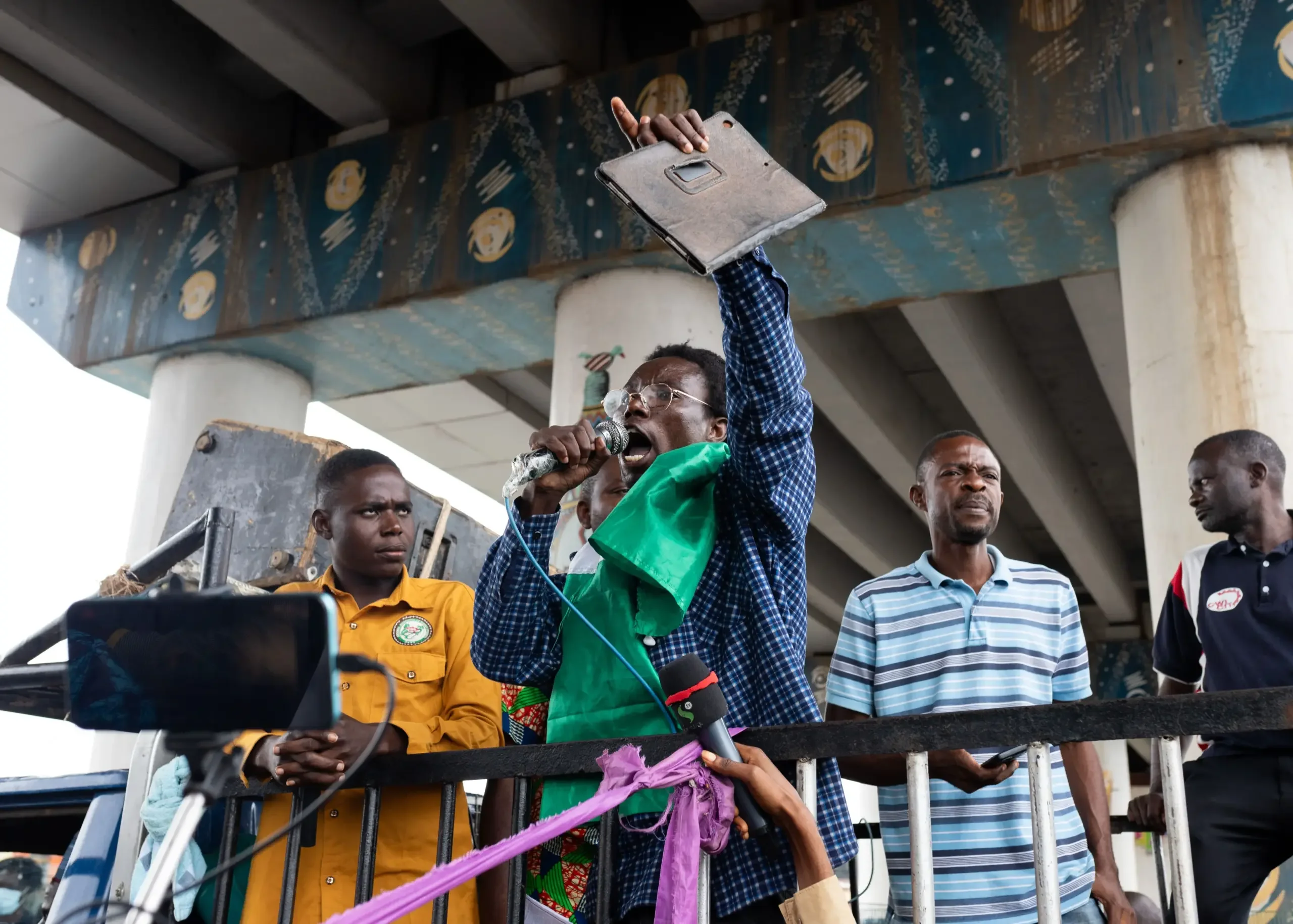
A group of men during a peaceful protest; one of them holds a microphone and a banner. Photo taken by Stephanie Douglas. Nigeria. Via Pexels. Pexels License.
In Mozambique, although Article 48 of the Constitution guarantees freedom of expression, many young people find that openly discussing sensitive issues like corruption and inequality can lead to significant personal risk. This discrepancy highlights a stark divide between democratic ideals and the everyday realities that shape youth experiences.
Over the last twenty years, hip-hop has emerged as a critical medium for the youth in urban centers, particularly Maputo. More than just music, it serves as a powerful vehicle for documenting and critiquing the socio-political climate. The rise of hip-hop coincided with the political shifts of the early 1990s, marked by multipartyism; however, it also reflects the persistent issues of high unemployment and a crisis of trust in the predominantly FRELIMO-led government.
Artists like Azagaia and groups like GPRO have articulated their community's frustrations through music. Azagaia’s track “O ciclo da Censura” poignantly asks, “Who said that in this country there is freedom of expression?”—a powerful reminder of the lived realities behind the ideology.
Redefining Political Engagement
Today's Mozambican youths are forging new avenues for political participation. While traditional citizenship is often linked to established political parties, younger generations are turning to a diverse array of organizations, from feminist groups like the Woman’s Forum to platforms aimed at monitoring governance. This shift indicates a desire for engagement that exceeds the confines of elections.
However, their evolving forms of participation often clash with authorities that perceive expressive acts—such as protests—as threats. A notable incident in 2016 illustrated this tension when feminist activists voiced opposition to a controversial ban on miniskirts in schools. Proposed as a measure against sexual harassment, this ban ultimately sought to shift responsibility from aggressors to young women, further entrenching societal norms around gender. The protests highlighted broader struggles for identity and autonomy, especially when foreign activists, such as Eva Anadón Moreno, faced detention for supporting local efforts.
The Nature of Censorship
Rather than overt censorship, recent years in Mozambique have seen a subtler form of suppression shaped by economic pressures. Azagaia noted in a past interview that the foremost barrier to free expression isn’t merely threats from authorities, but the precarious economic climate. Many depend on favor with the state for employment, making public dissent a risky endeavor.
This has created what can best be described as an “economy of silence.” Journalists and public officials often self-censor, artists choose words carefully, and young activists realize the steep costs of outspoken criticism. In such a context, protest music becomes vital—it challenges the collective complacency and fosters communities that recognize shared experiences of injustice.
A Facade of Freedom
The Mozambican Constitution claims to uphold citizen freedom of expression and opinion. However, freedom exists not just in declarations, but in the actual ability to exercise these rights. The illusion of freedom can be disheartening: citizens are expected to speak freely while facing mechanisms that can make dissent perilous, such as rising telecommunications tariffs.
Youth activism embodies this complex reality, as young people amplify marginalized voices and challenge the status quo. The more effectively an artist or activist can mobilize support, the higher the stakes become—intimidation and disinformation are constant threats.
Creating New Realities
Despite facing numerous hurdles, Mozambican youth continue to cultivate political hope through music and digital activism, asserting that citizenship is an active practice rather than a passive status. The pressing challenge lies not only in the right to free speech as stated in the constitution, but also in forging conditions that allow everyone to express themselves without fear of retribution. The essential question for Mozambique centers on whether young voices can resonate openly without jeopardizing their safety and livelihoods.


